Play House / a neighbourhood tabletop journal [email protected]

Issue 07 · set the table

Make room
for play.

A graphic little journal for generous tabletop nights: clear starts, loose endings, and games that make a room feel like a neighbourhood.

No clocks, no podiums—just a table, a few choices, and time to settle in.
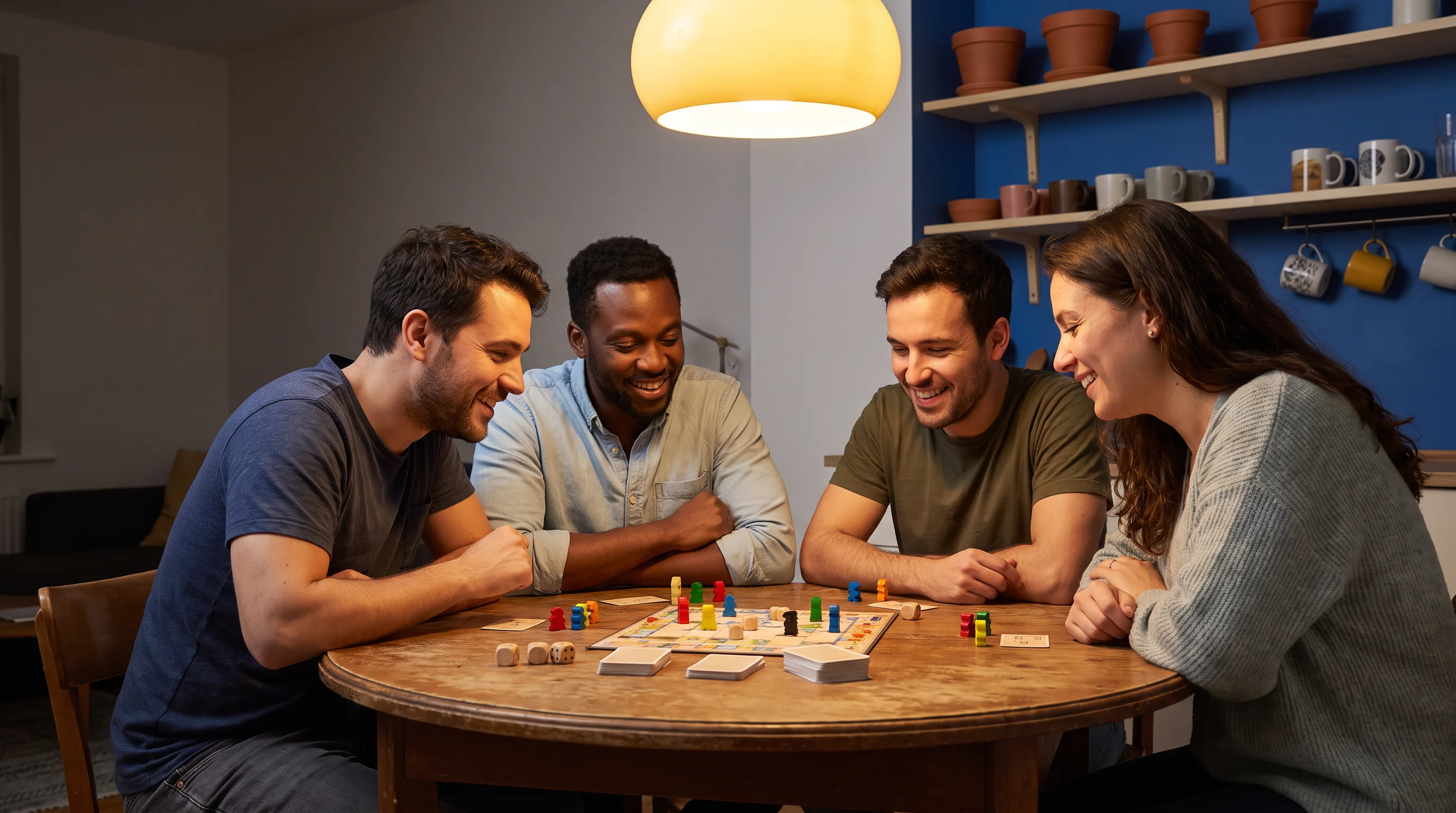
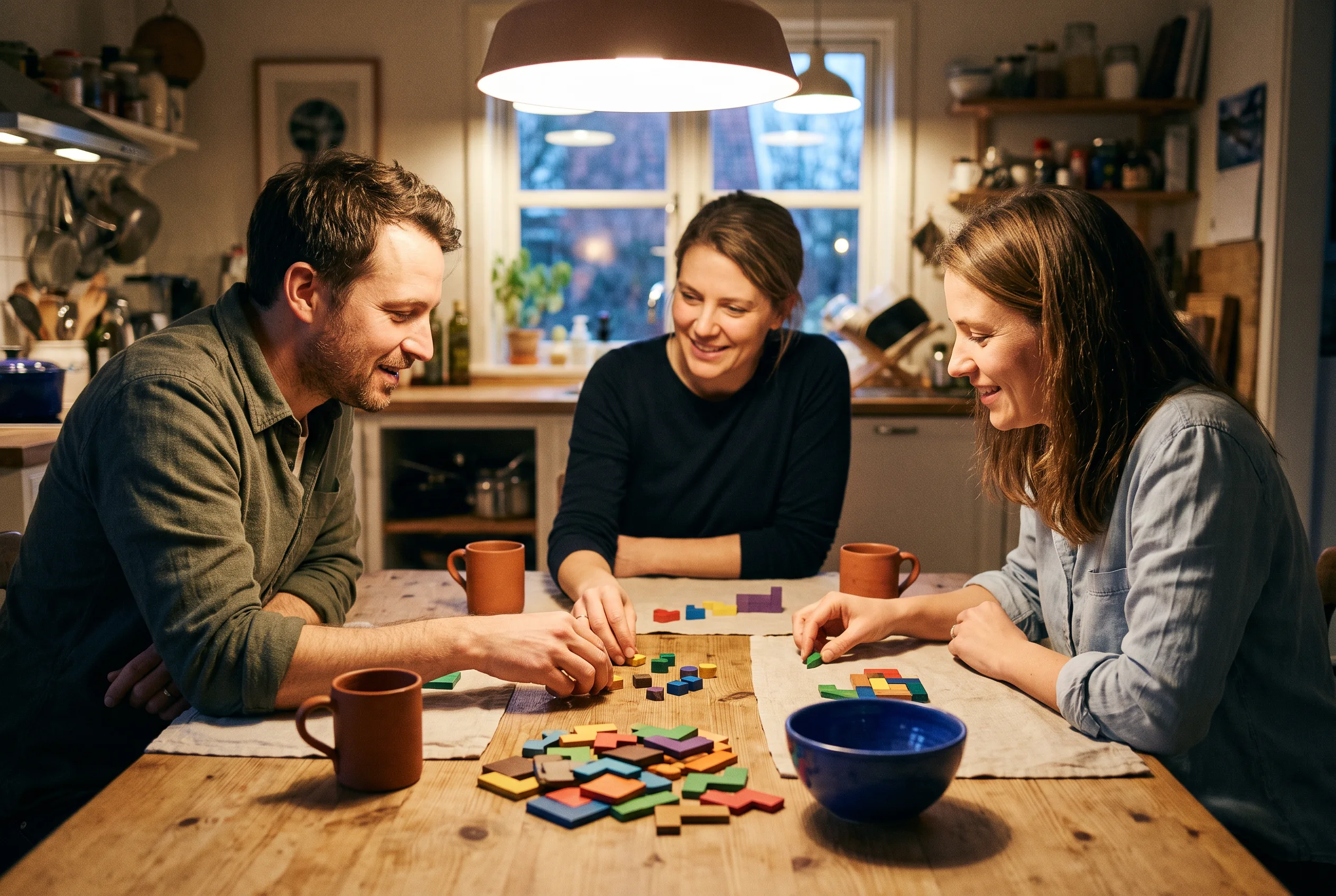
Four friends gathered around a tabletop game in a warm roomA good seat changes the whole night.
Set the moodExplain togetherKeep the table kindLeave space for a rematch

01 / SESSION BULLETIN

A friendly first turn.

The small signals that tell everyone what kind of night this is before the first card is dealt.

Tonight’s noticeboard

Bring curiosity, not a résumé.

  • Put the rulebook within reach, not in one person’s hands.
  • Name the intended mood: chatty, puzzly, cooperative, or gently competitive.
  • Let a guest pass on a genre without needing a reason.

02 / FORMAT SELECTOR

Pick the shape of the evening.

Slide through four useful starting points. The selection changes the host note at right; none is a default, because groups arrive differently.

Selected / 03

Thoughtful tactics

Set out components in small groups, then teach the first decision before every exception. Invite players to say what they are trying, so planning stays social rather than silent.

Host cue: Keep snacks away from the shared pieces and give the table a clear edge for discarded cards.
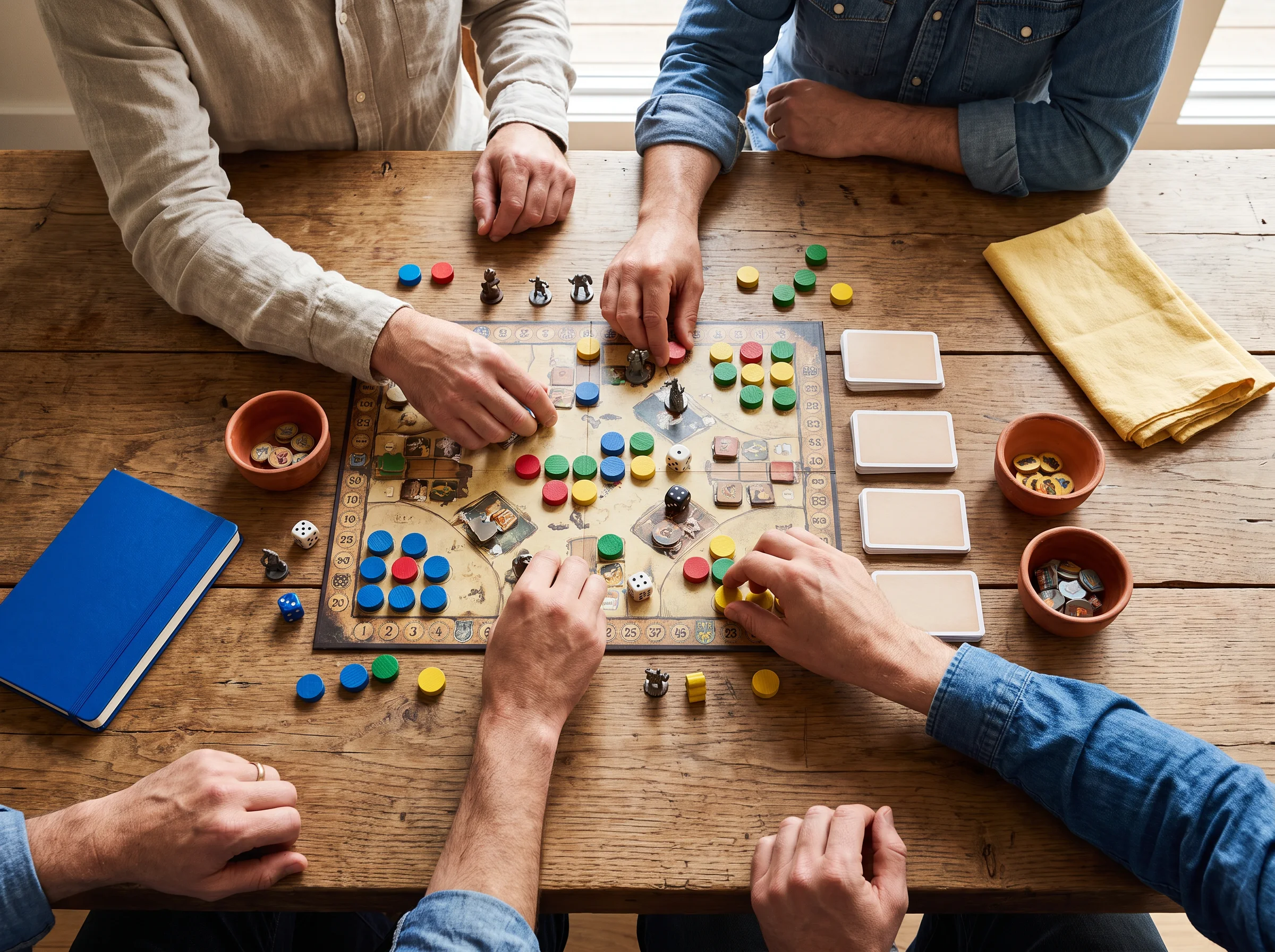
Hands gathered around a colorful board game from above
The table is already a conversation.
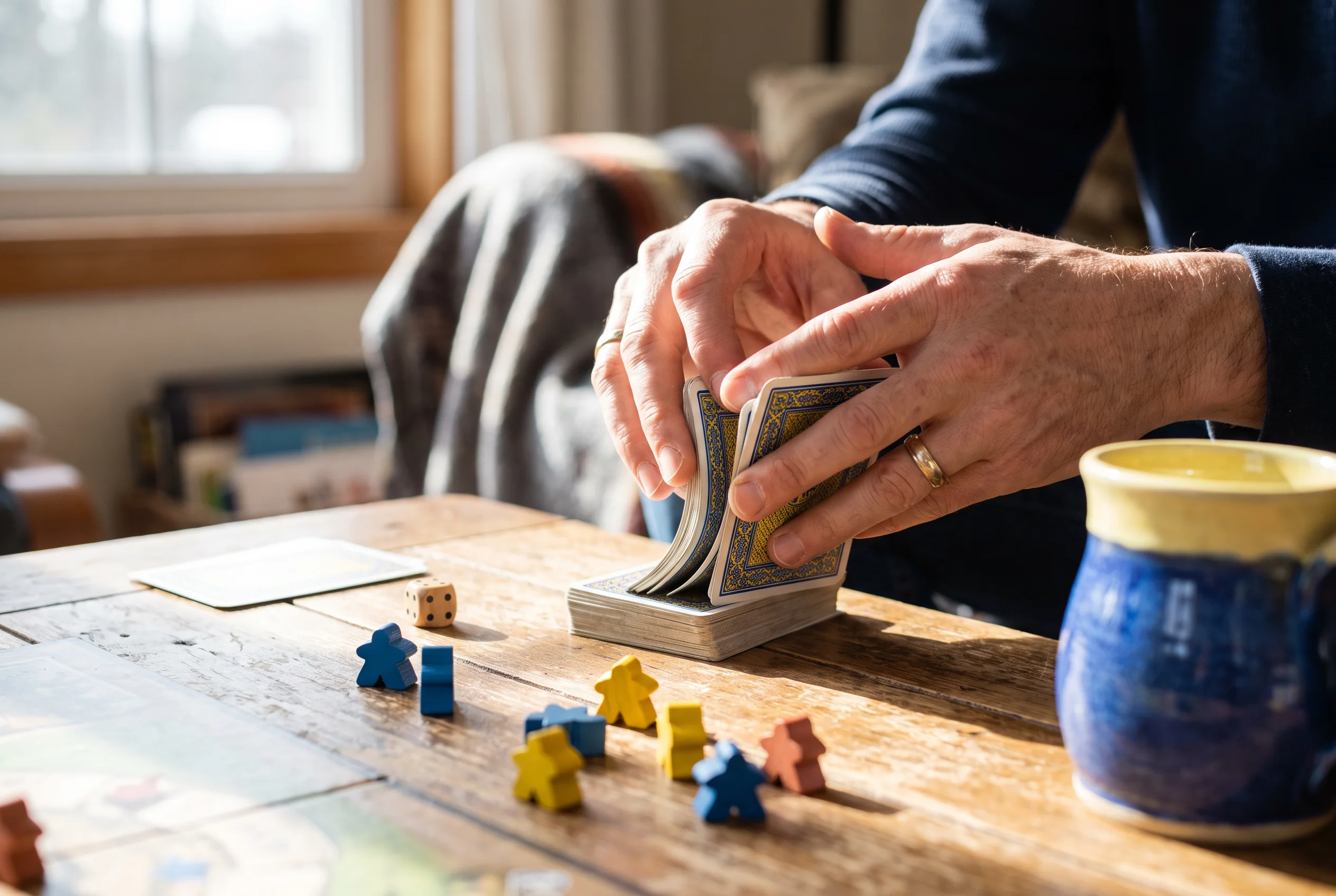
Hands shuffling cards beside wooden game pieces
Pass the deck, not the pressure.
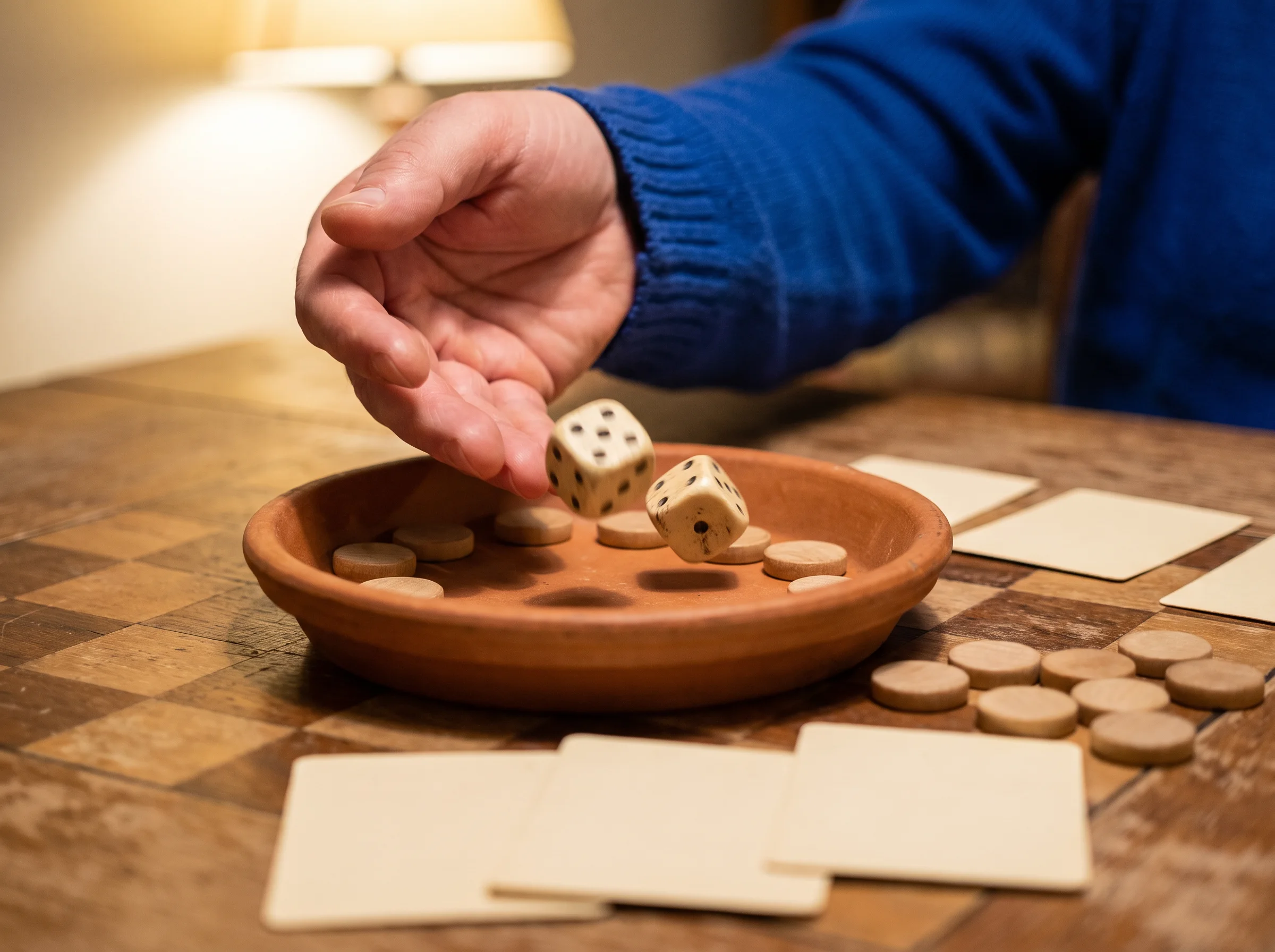
Hand rolling dice into a terracotta dish
Make small rituals visible.

03 / TABLE POSTCARDS

Scenes worth leaving on the table.

Four small reminders that games live in people, hands, pieces, and the ordinary rooms that hold them.
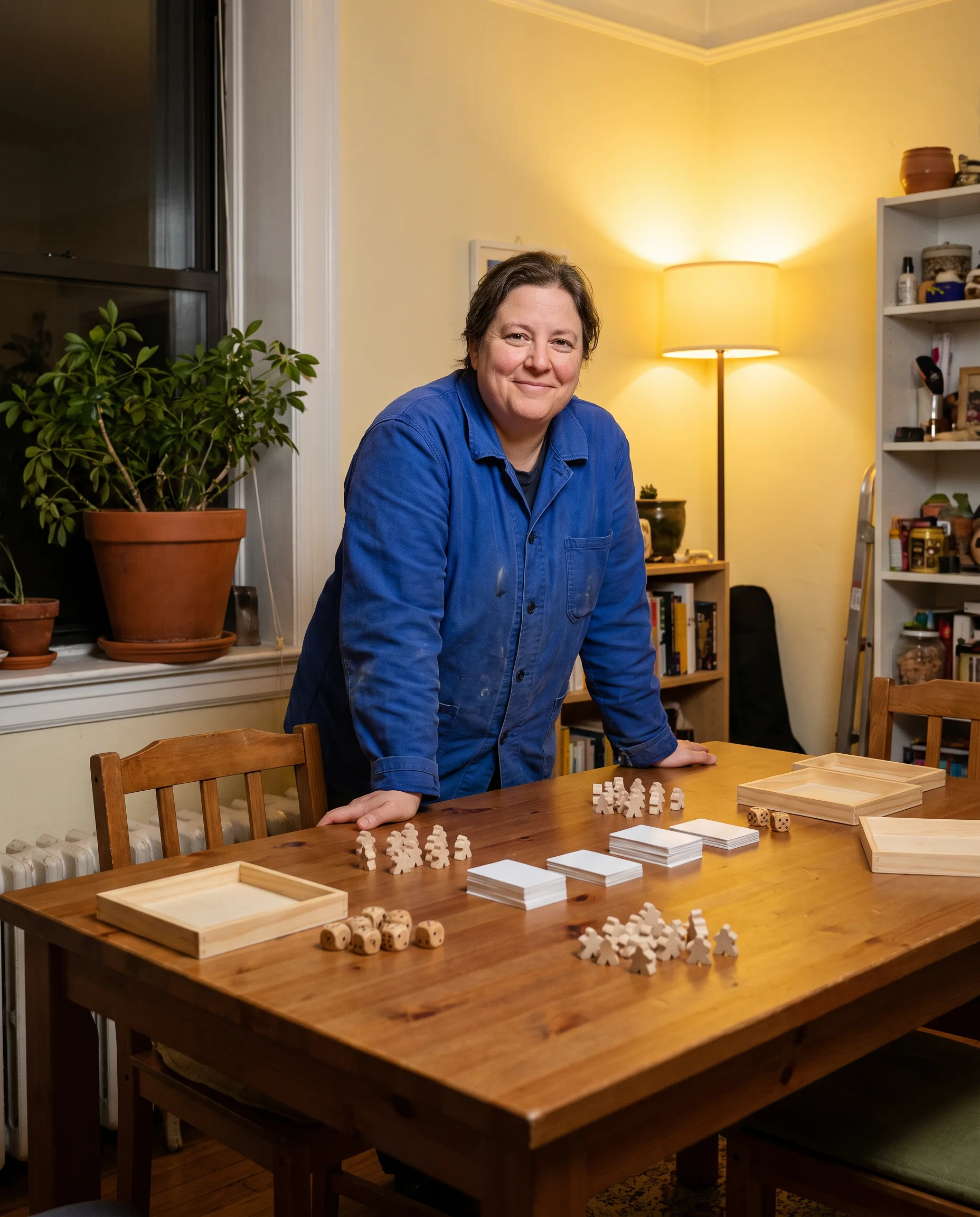
A tabletop game host beside a prepared wooden game table
Set out the pieces before the guests arrive.
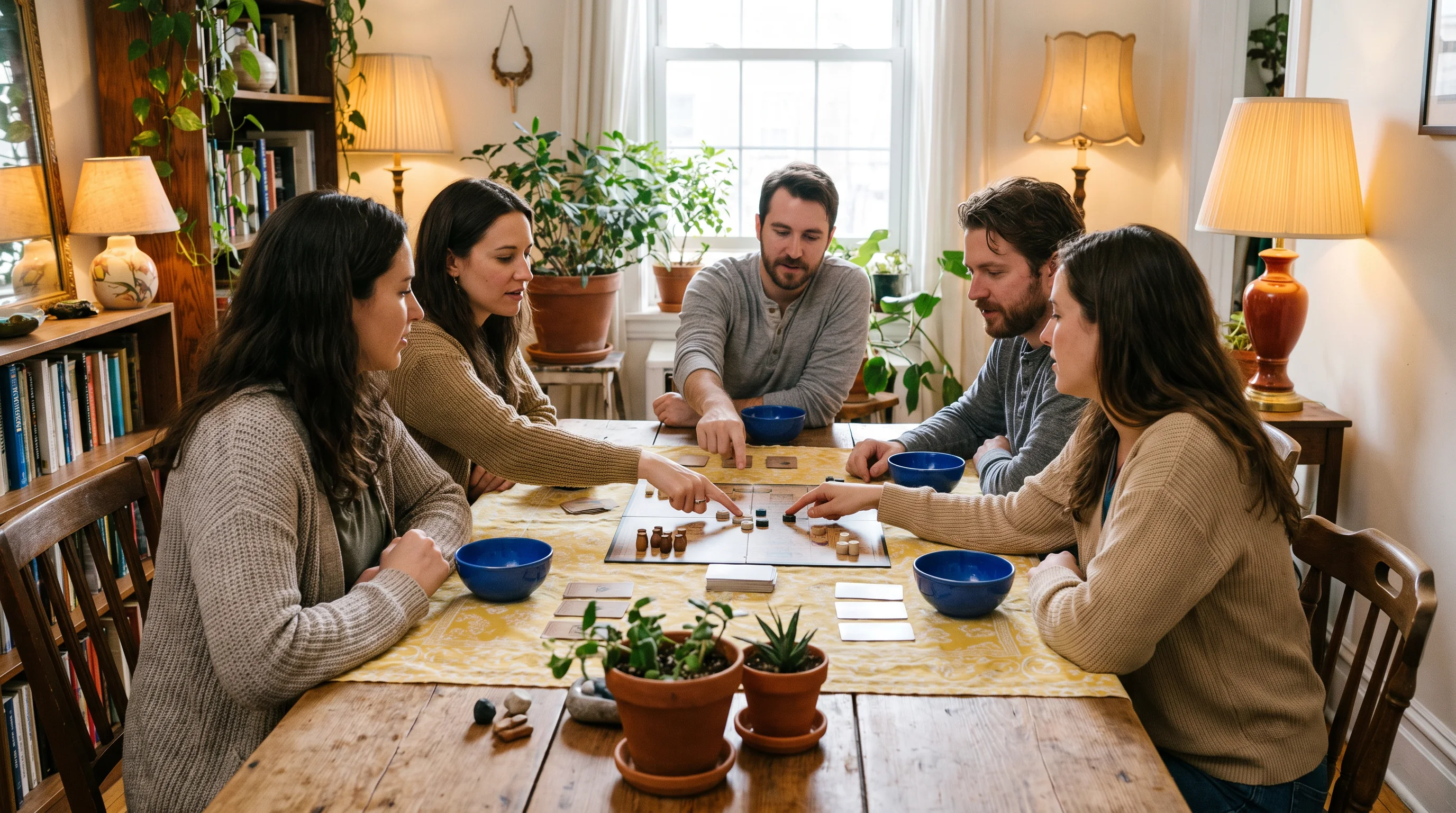
Five friends playing a strategy game around a long table
Give every voice a way into the plan.
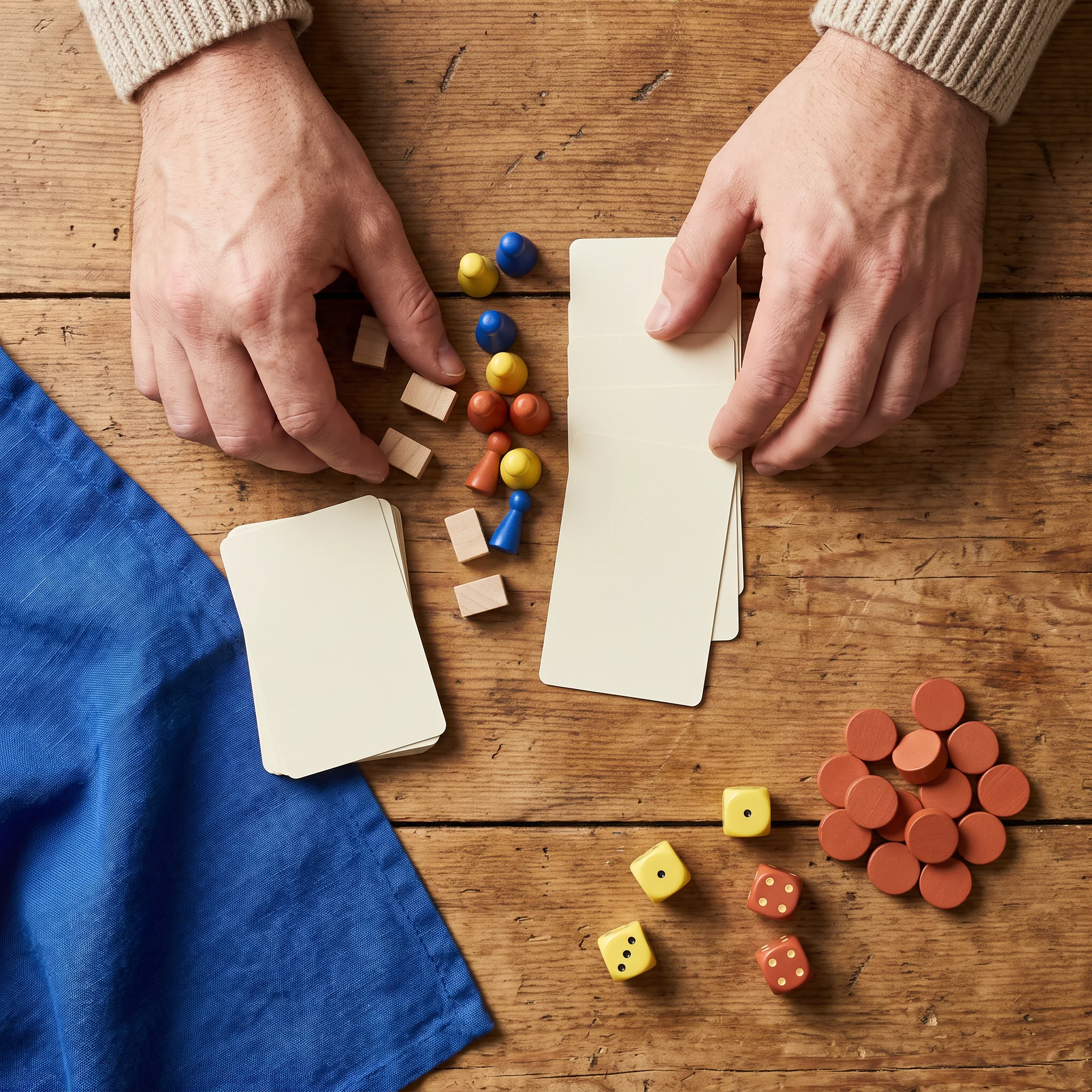
Hands arranging blank cards and colorful game pieces from above
Setup can be part of the welcome.
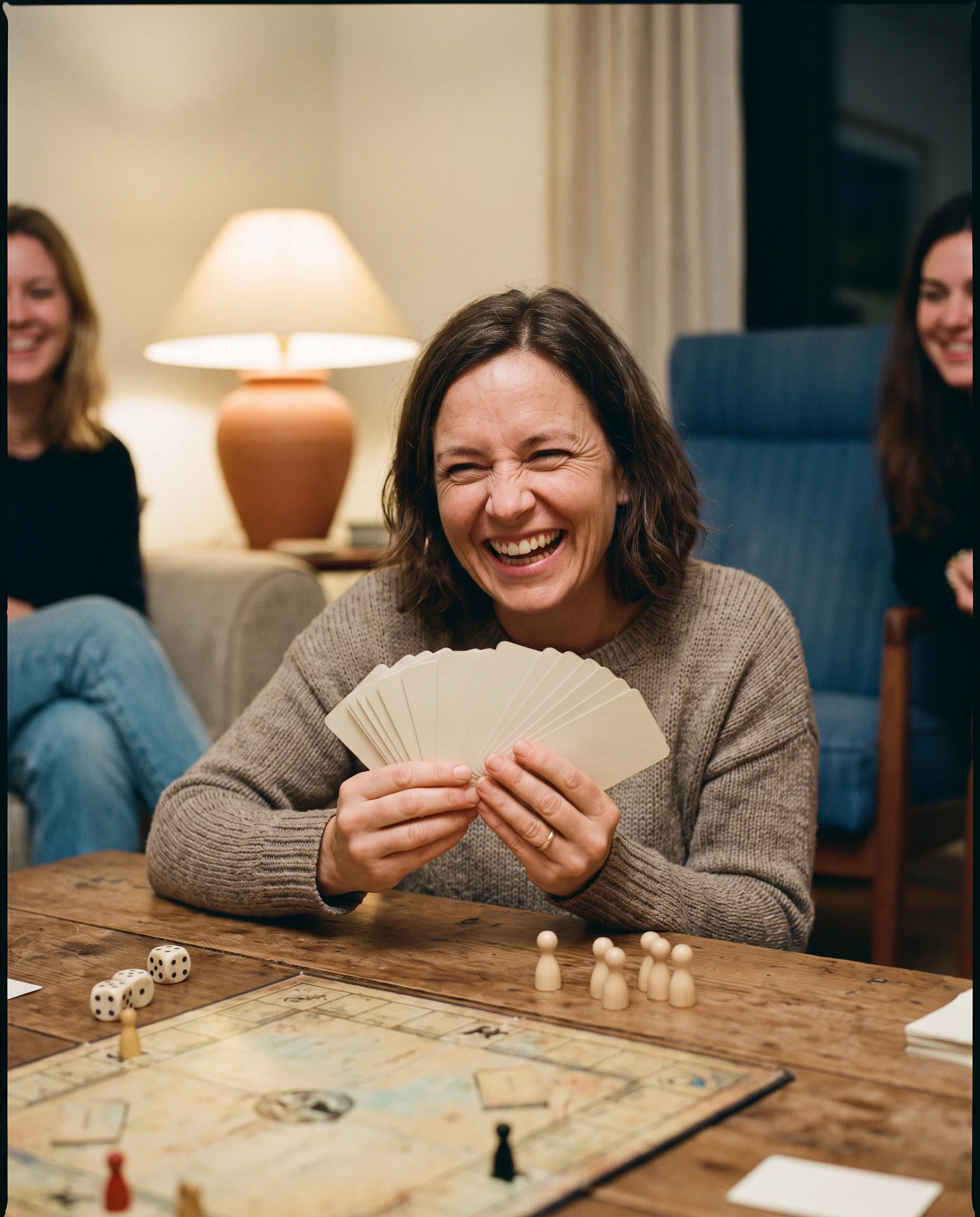
A person laughing while holding blank cards at a game table
A little delight is a fine ending.

03 / HOST SEATING MAP

Arrange for easy asks.

The best seat is not the best view. It is the seat that makes a question feel normal.
Rule
reader
New to
this game
Component
keeper
Snack
sidekick
First
player
Place the rule reader beside the newest player.They can quietly point, clarify, and share the opening steps without calling a pause across the room.
Give the component keeper a calm edge.A clear spot for tokens and discard piles prevents every turn from becoming a search party.
Rotate the first player, even mid-evening.It changes who opens a round and loosens any accidental hierarchy that a fixed seat can create.
Friends collaborating with colorful wooden tiles at a dining table

04 / TIMER-FREE PACING

Let the game breathe.

A relaxed night can still have a satisfying shape. Use room cues, not countdowns.

  1. Open with one concrete choice. Instead of teaching every system, ask each player to choose a color, role, or first card.
  2. Take a natural pause after the first round. Refill water, untangle one rule, and notice whether the table wants more pace or more talk.
  3. End while the room is still curious. A small recap and a photo of the table can be a softer ending than pushing toward one more setup.

05 / COMPONENT CARE DRAWER

Keep the pieces pleasant to meet again.

A few quiet habits protect shared games and help the next setup feel immediate.
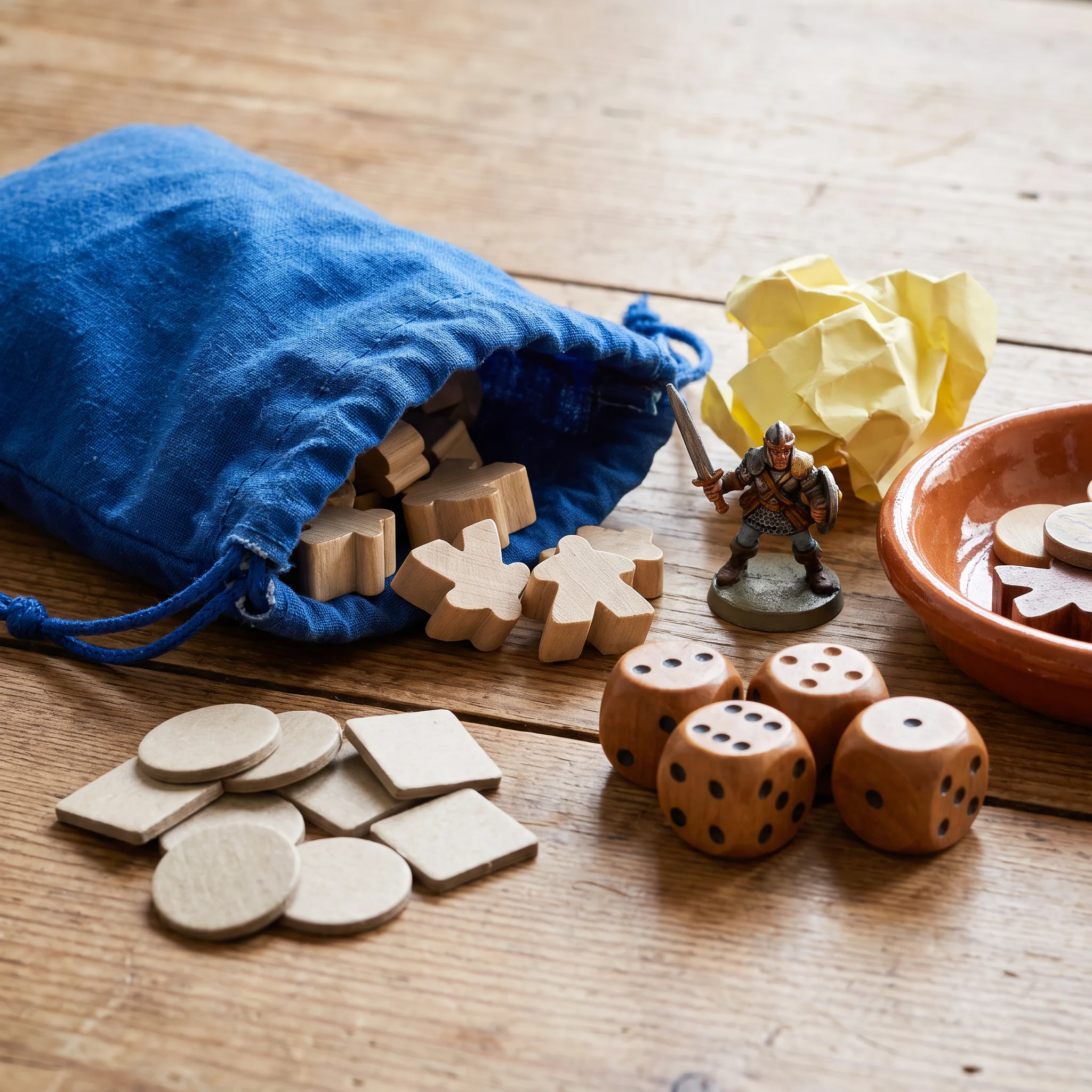
Wooden pawns, dice, miniature and components on a table

Keep drinks on a separate surface and return cards in small, square stacks. If a card bends during play, do not rush to flatten it at the table; lay it between clean, dry sheets afterward so the evening stays easy.

Use a shallow bowl or cloth tray for loose pieces. It catches runaway dice, makes packing less fussy, and keeps tiny wooden parts from migrating beneath chairs or into snack crumbs.

Start with a quick wipe and a cloth or placemat under rough components. The aim is not a precious museum display; it is a surface where everyone can reach, rest an elbow, and move a piece confidently.

06 / CHOOSE THE NEXT GAME

Build a tiny brief.

Check the ingredients you want for the next table. This list stays on your device until you clear it.

The etiquette ribbon.

Good table manners are not about perfection. They are a way of keeping choices with the people making them: offer help, do not seize a turn; explain openly, do not perform expertise; make room for the quiet player before adding another rule.

07 / FAQ

Small answers for real tables.

Four things hosts often wonder about when the chairs are arriving and the components are still in their boxes.

Begin with the feeling and the goal: what everyone is trying to make, discover, protect, or finish. Then teach the first decision players will actually make. Leave edge cases for when they appear, and invite someone else to restate the first step in their own words. That quick exchange tells you whether the table is ready more reliably than adding another rule.
Choose a format that makes information visible and let experienced players narrate their own choices without prescribing anyone else’s. Pair a newer player with a helpful neighbor rather than assigning a coach. If a strategic advantage appears early, name it as part of the game’s learning curve and offer a reset or a shared look at options only if the player wants one.
No. A table can end a game because the group has understood its shape, because conversation has become the better activity, or because the energy has moved elsewhere. Try a short check-in at a natural break: continue, pause and return another day, or pack it up. Giving those options out loud prevents anyone from feeling trapped by an unfinished score.
Send a simple note about the mood rather than a list of expectations: where to arrive, whether food is involved, and that it is fine to watch or step out. At the table, introduce people before components, give the guest an easy place to set a drink, and offer one meaningful choice early. A welcome is practical when it leaves room for someone’s own pace.

08 / CONTACT

Leave a note at the door.

Have a thoughtful hosting question or a journal idea? Prepare a message below.

Nothing is sent automatically; a valid note prepares a local mail draft.